
What Materials Are Best for Home Framing?
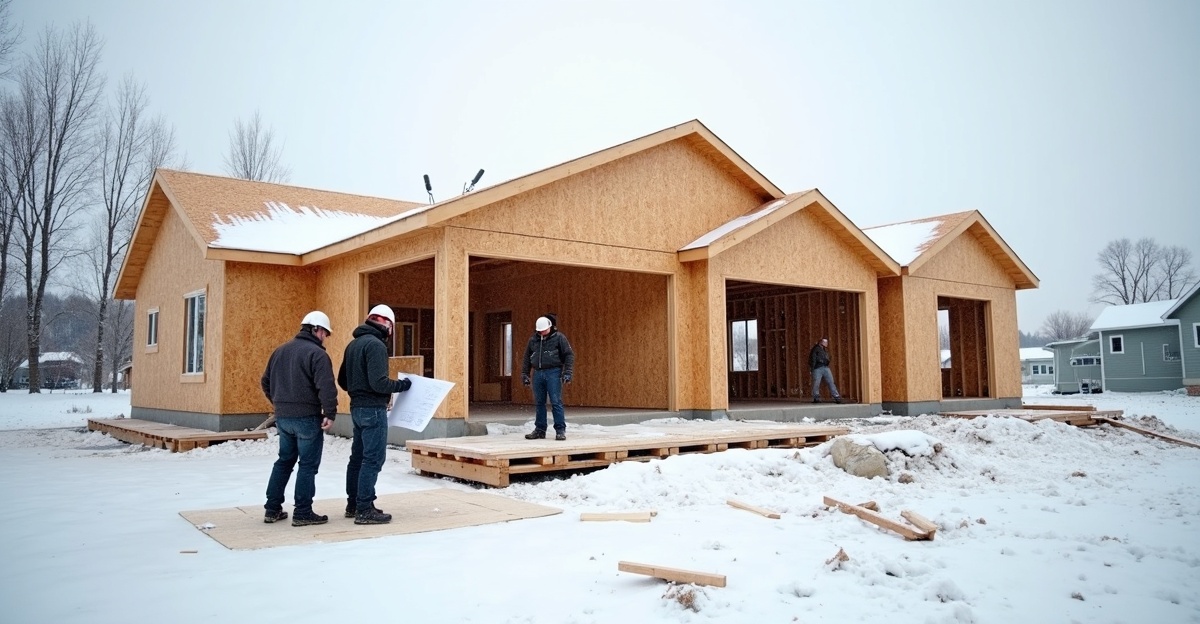
Choosing the best materials for framing house construction requires us to weigh strength, durability, cost, and performance under heavy snow loads and cold Eastern Idaho winters. We compare wood, light-gauge steel, and alternative systems like ICFs and SIPs based on engineering demands, crew experience, thermal efficiency, and total installed cost rather than material price alone.
Key Takeaways
- We continue to use wood framing as the standard for most single-family homes because it controls costs, aligns with local crew experience, and performs well when engineers size it correctly for snow loads.
- We recommend steel framing for projects that demand fire resistance and dimensional stability, but we account for higher labor costs and add insulation details to reduce thermal bridging.
- We consider alternative systems such as ICFs and SIPs for their structural strength and energy performance, though they often bring higher upfront costs and fewer experienced crews in our region.
- We focus on total installed cost, inspection flow, and construction speed instead of raw material pricing alone when we compare framing systems.
- We make framing decisions early in the planning phase so structural design, local code requirements, and long-term performance goals stay aligned from the start.
Choosing the Right Framing Material: What Matters Most Up Front
The best materials for framing house construction depend on strength, durability, cost, and how well the system fits Eastern Idaho conditions. There is no single material that works best for every project.
Framing must meet structural demands first. Snow load requirements, local building codes, design spans, and layout all affect the decision. Heavy snow load home construction is a real consideration in Eastern Idaho. Roof systems and wall assemblies must handle significant seasonal weight. Freeze-thaw cycles and dry climate conditions also influence how materials perform over time.
The most common home framing materials fall into three categories:
- Wood framing
- Light-gauge steel framing
- Alternative systems such as insulated concrete forms (ICFs), structural insulated panels (SIPs), and engineered wood products
Each option has advantages and trade-offs. Budget plays a role, but raw material price alone does not define value. Total installed cost, crew availability, engineering requirements, permitting familiarity, and project timeline all matter.
Framing decisions directly affect structural integrity and long-term performance. They also influence build speed and resale value. A poorly chosen system can increase labor time and inspection delays. A well-matched system keeps a project moving efficiently and performing properly for decades.
In Idaho home construction, we always evaluate residential framing options against local conditions first. From there, we align the system with design goals and long-term expectations.
Wood Framing: Why It Remains the Standard for Most Homes
Dimensional lumber remains the most common framing material in Eastern Idaho. Traditional stick framing continues to perform reliably and cost-effectively across most single-family projects. We’ve outlined the basics of this system in our guide to stick framing.
Properly engineered wood framing handles heavy snow loads without issue. Structural strength comes from correct span tables, beam sizing, connections, and load path design. When built correctly, wood performs well in snow load home construction.
Wood framing offers clear advantages:
- Strong and durable when engineered correctly
- Widely available materials in Eastern Idaho
- Experienced local framing crews
- Easier field adjustments for custom designs
- Competitive total installed cost
Durability concerns are often overstated. In a dry climate like Eastern Idaho, wood framing performs very well when protected from long-term moisture exposure. Proper roofing, flashing, and ventilation systems prevent most structural moisture issues.
Fire is another common concern. Wood is combustible, but it performs predictably in a fire. Building codes account for burn rates and structural redundancy under International Residential Code fire-resistance provisions. Fire-rated assemblies can be achieved when required.
Two misconceptions come up often in wood vs steel framing discussions:
- Wood isn’t durable.
- Wood can’t handle heavy snow loads.
Both statements are inaccurate when the system is engineered and installed correctly.
For custom home framing Idaho projects, wood provides flexibility. Field changes are easier. Irregular layouts and architectural details are simpler to execute. That flexibility often keeps steel framing vs wood cost comparisons in wood’s favor, even when lumber prices fluctuate.
When we evaluate framing material pros and cons for most single-family homes, wood remains the standard for good reason.
Steel Framing: Where It Makes Sense and What to Watch For
Light-gauge steel framing uses cold-formed steel studs in place of dimensional lumber. It is common in certain residential and multifamily applications.
Steel offers several advantages:
- Non-combustible material
- Resistant to termites and rot
- Uniform, straight studs that resist warping
Steel is often described as “stronger,” but strength depends on engineering and design. A poorly designed steel structure can fail just as easily as a poorly designed wood one. Material alone does not determine structural capacity.
Cost requires a broader view. Steel framing vs wood cost comparisons often focus on material pricing. That’s incomplete. Steel typically requires specialized crews, fasteners, and tools. Labor may cost more in regions where fewer crews specialize in residential steel framing.
Cold climate performance is another factor. Steel conducts heat more readily than wood, a phenomenon explained by the LSF Pro Structures guidance on thermal bridging. This creates what’s known as thermal bridging. In simple terms, heat transfers through steel studs more easily, which can reduce wall assembly efficiency. Additional insulation detailing is often required to maintain performance. For anyone evaluating the best framing material for cold climate construction, this detail matters.
Steel framing makes the most sense in:
- Multifamily construction projects
- Buildings with specific fire resistance requirements
- Designs where dimensional stability is a priority
In many multifamily framing materials conversations, steel becomes more competitive as building size increases. Repetition and standardized layouts can offset some labor costs.
Steel works well in certain cases. It simply is not automatically superior to wood in residential framing.
Other Framing Systems and When They’re Appropriate
Beyond wood and steel, several specialized residential framing options exist.
Insulated concrete forms (ICFs) use stacked foam forms filled with concrete. Structural insulated panels (SIPs) combine insulation and structural sheathing into large prefabricated panels. Engineered wood products such as LVLs and I-joists are also common in modern framing systems.
These systems offer potential advantages:
- Improved energy efficiency in some applications
- Strong structural performance for long spans
- Reduced thermal bridging in specific assemblies
Trade-offs must be weighed carefully. Upfront costs tend to be higher. Lead times can extend schedules. Contractor familiarity may vary by region. Inspection departments may also have varying levels of experience with alternative systems.
In Idaho home construction, we occasionally use these systems for specific design goals. They are not the default for most custom homes, but they solve particular structural or efficiency challenges when applied appropriately.
Wood vs Steel Framing Comparison Table
Below is a practical side-by-side comparison of wood vs steel framing and alternative systems, with Eastern Idaho conditions in mind.
| Criteria | Wood Framing | Steel Framing | Alternative Systems (ICF/SIP) |
|---|---|---|---|
| Durability in Eastern Idaho Climate | Performs well when protected from moisture; engineered for snow load home construction | Resistant to rot and insects; handles snow loads when engineered correctly | Concrete-based systems perform strongly; varies by product |
| Fire Resistance | Combustible but predictable; rated assemblies available | Non-combustible | Concrete systems highly resistant; varies with panels |
| Moisture Resistance | Requires moisture control detailing | Not subject to rot; requires condensation control | Concrete inherently moisture-resistant |
| Cost Range | Often lower total installed cost for single-family homes | Material may fluctuate; labor can increase total cost | Higher upfront cost in most cases |
| Labor Availability in Eastern Idaho | Widely available skilled crews | Fewer residential specialists | Limited crews depending on system |
| Best Use Scenarios | Custom homes, standard single-family construction | Multifamily, fire-sensitive designs | Energy-focused or specialized structural designs |
Steel is not automatically better. Wood is not automatically cheaper. The right material depends on climate, structure type, crew experience, and engineering requirements.
How to Evaluate Framing Decisions During the Planning Stage
During planning, material selection should be addressed early with the designer, engineer, and builder working together.
We recommend asking clear questions:
- What snow load is the structure engineered for?
- How does this material affect total installed cost and timeline?
- What long-term maintenance should be expected?
- How familiar are local crews and inspectors with this system?
Material price alone does not determine value. Installed cost includes labor rates, build speed, inspection efficiency, and change flexibility. A system that looks cheaper on paper can increase overall cost through delays or specialized labor requirements.
Design coordination is critical in both custom home framing Idaho projects and larger developments. Framing also directly affects long-term quality. We explain this connection in our overview of how framing impacts build quality.
Is steel framing better than wood? It can be in specific applications, especially multifamily or fire-rated projects. For most single-family Idaho home construction, engineered wood framing remains efficient, durable, and cost-effective.
What framing works best in cold climates? Systems that minimize thermal bridging and allow proper insulation detailing perform best. Wood framing naturally reduces heat transfer through studs compared to steel, which is one reason it remains common in colder regions.
Every project has its own requirements. For those planning a custom home build or evaluating multifamily residential framing options, we recommend reviewing structural design goals early and discussing material selection before plans are finalized. Clear planning leads to better performance, smoother inspections, and long-term value.
Frequently Asked Questions
Wood framing is typically the most cost-effective option for single-family homes. While lumber prices can fluctuate, wood often has lower total installed costs due to widespread crew experience and faster build times. Labor availability, ease of adjustments, and streamlined inspections also help control overall project expenses compared to steel or alternative systems.
Yes, properly engineered wood framing can handle heavy snow loads effectively. Structural strength depends on correct beam sizing, span calculations, and load path design rather than material alone. When designed to meet local building codes, wood performs reliably in regions with significant seasonal snow accumulation.
Steel framing can perform well structurally in cold climates, but it requires additional insulation detailing. Steel conducts heat more easily than wood, creating thermal bridging that can reduce energy efficiency. To maintain performance, builders often add continuous exterior insulation or specialized wall assemblies to minimize heat loss.
ICF (insulated concrete forms) and SIP (structural insulated panels) systems can offer improved energy efficiency and strong structural performance, as outlined in Whole Building Design Guide research on high-performance wall systems. However, they often involve higher upfront costs and limited contractor availability. These systems are best suited for projects prioritizing energy efficiency or specific structural requirements rather than standard residential construction.
Framing material should be selected early in the planning and design phase. Early decisions allow engineers and designers to align structural calculations, insulation strategies, and code compliance with the chosen system. Delaying this choice can lead to redesign costs, permit delays, and adjustments that impact budget and construction timelines.