
How to Plan a Multifamily Housing Project
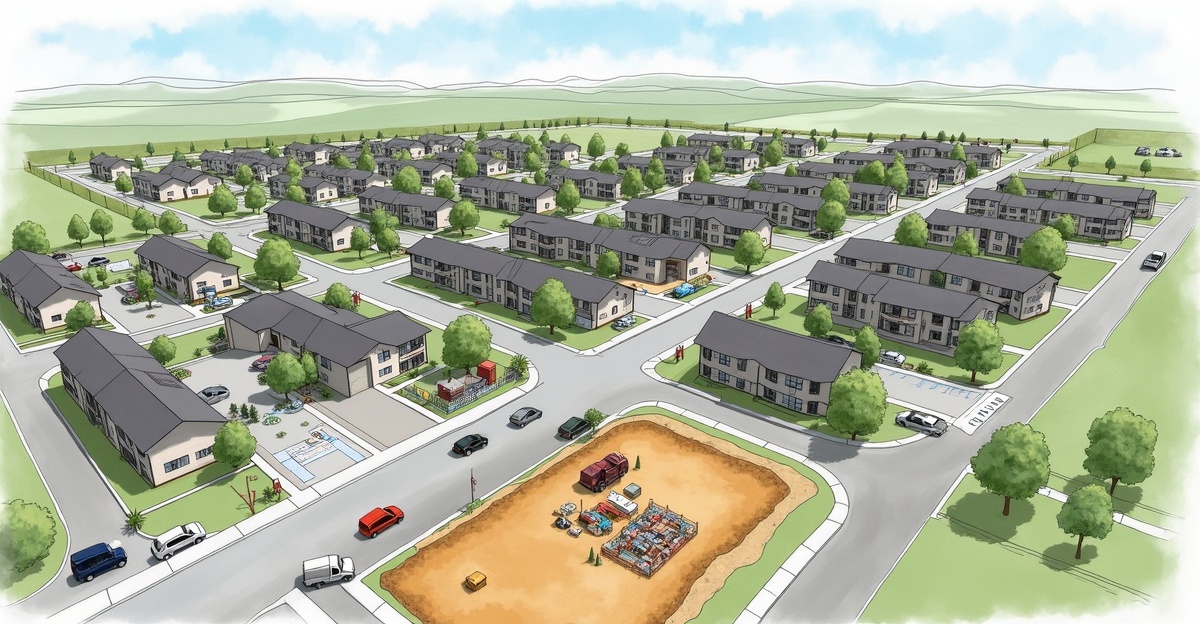
Planning multifamily housing development in Idaho Falls calls for early focus on zoning rules, land constraints, and permit timelines. Starting with a solid feasibility analysis and bringing in contractors during concept design keeps the budget, schedule, and approvals aligned from the start.
Key Takeaways
- Site selection must comply with Idaho Falls zoning code. Some sites labeled “multifamily” may still limit unit count, building height, or land use.
- Complete a feasibility study before starting design. It should include market conditions, land pricing, and realistic construction estimates.
- Development moves through clear stages. Each phase brings in key players like developers, architects, engineers, and contractors who combine their expertise.
- Permitting requires multiple layers of review. Expect this to take between 3 and 6 months or longer, depending on the site location and project scope.
- Bring a general contractor into the process early. This helps create accurate budgets, ensures the design is buildable, and reduces the need for costly revisions.
Local Zoning Rules and Site Selection: What You Need to Know First
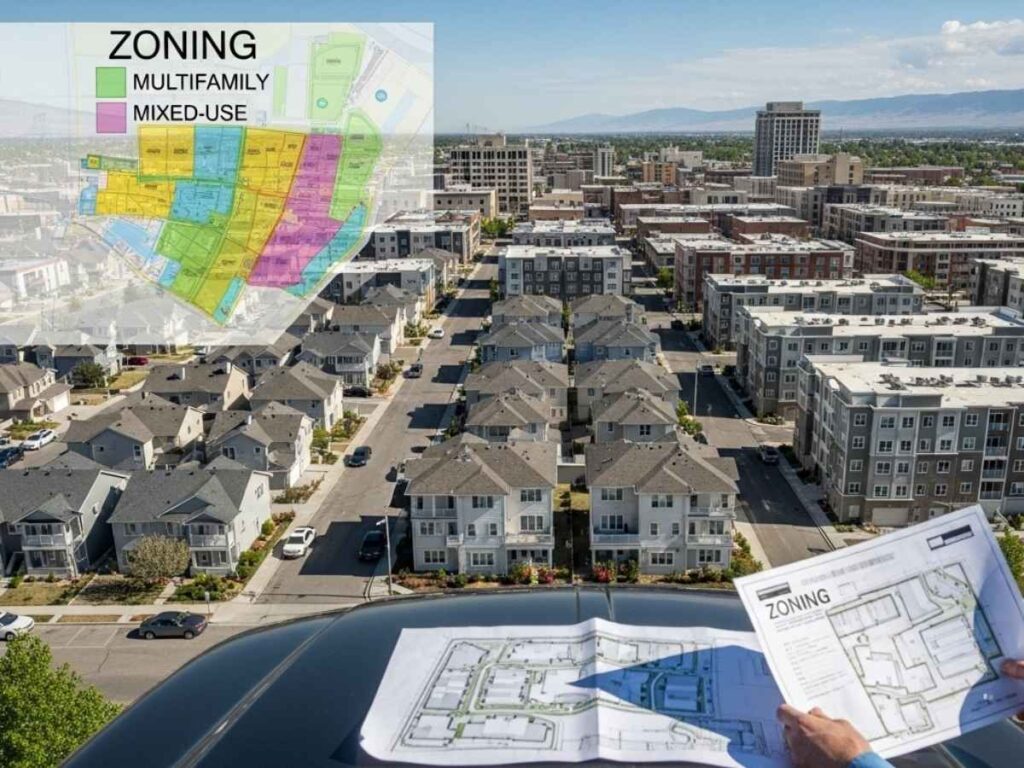
Choosing an appropriate site is the first make-or-break decision when planning any multifamily housing project. In Idaho Falls, zoning codes and land use regulations are especially important to understand before proceeding with design or property acquisition.
The City of Idaho Falls Land Development Code defines ‘multifamily’ use generally as housing with three units or more within a development. However, what fits on the ground varies widely. For instance, some zones permit duplexes or triplexes, but not large-scale buildings. Others allow higher unit counts but cap building height, unit density, or lot coverage. Reviewing the Idaho Falls zoning for multifamily should be done early. A property may be labeled “multifamily,” but density thresholds could limit your intended design.
Key considerations when evaluating land include:
- Off-street parking minimums required per unit
- Maximum building height limits, typically impacted by adjacent land uses
- Compatibility with surrounding residential zones
- Access to public utilities or stormwater drainage
- Site constraints such as floodplains, slopes, or existing easements
Areas in or near the downtown core may offer more flexibility but will usually require broader neighborhood review and may trigger design standards. It’s good practice to review the most current zoning map and consult the Idaho Falls Planning Division to verify allowable uses and development requirements before engaging contractors or architects.

Establishing Project Feasibility and Budget Parameters
Before sinking money into design or permitting, every multifamily development should begin with a feasibility study. The goal is to determine if the site, market, and projected costs support the investment.
Multifamily housing feasibility depends on several components:
- Market research showing typical rental rates and demand
- Unit count and unit mix (studios, 1-bed, 2-bed, etc.)
- Raw land costs and required site improvements
- Multifamily construction costs in Idaho
- Projected permitting timeline and carrying costs during development
In Idaho, construction costs range from $135 to over $200 per square foot. Higher-end finishes, multi-story buildings, garages, or poor soil conditions will all push the project to the upper end of the range. Realistic budgeting includes both direct costs (labor, materials) and soft costs (design fees, permits, utility fees, financing).
We often assist clients with preconstruction consultations to provide rough cost ranges and identify early construction risks. That feedback can help you make smarter buy/hold decisions and fine-tune your design goals to meet your return targets.

Understanding the Development Sequence and Team Roles
The multifamily development process in Idaho typically unfolds in predictable phases. Each step involves different team members who must coordinate well to keep the project on track.
Typical Multifamily Development Timeline – Key Roles
- Land Acquisition: Secure title to a zoned parcel, with preliminary suitability checks.
- Feasibility Analysis: Assess financial and legal viability. Initiated by the developer.
- Concept Design: The architect drafts layouts and site plans per zoning limits.
- Permitting: Submit plans to Idaho Falls Planning and Zoning and Building Divisions.
- Preconstruction: Contractor input helps refine plans, schedule, and costs.
- Construction: Foundation through final inspections.
In most cases, the developer engages an architect to lead design work. Civil engineers and surveyors assist with site design, drainage, and legal boundaries. During concept development, our role as a general contractor includes reviewing plans for constructability, identifying code issues, and flagging costly design elements early.
The full process generally takes 12 to 24 months. The permitting phase alone can range from 3 to over 6 months, depending on project scale and whether additional approvals (such as variances or special use permits) are needed.
Navigating Permitting, Codes, and Local Review Bodies
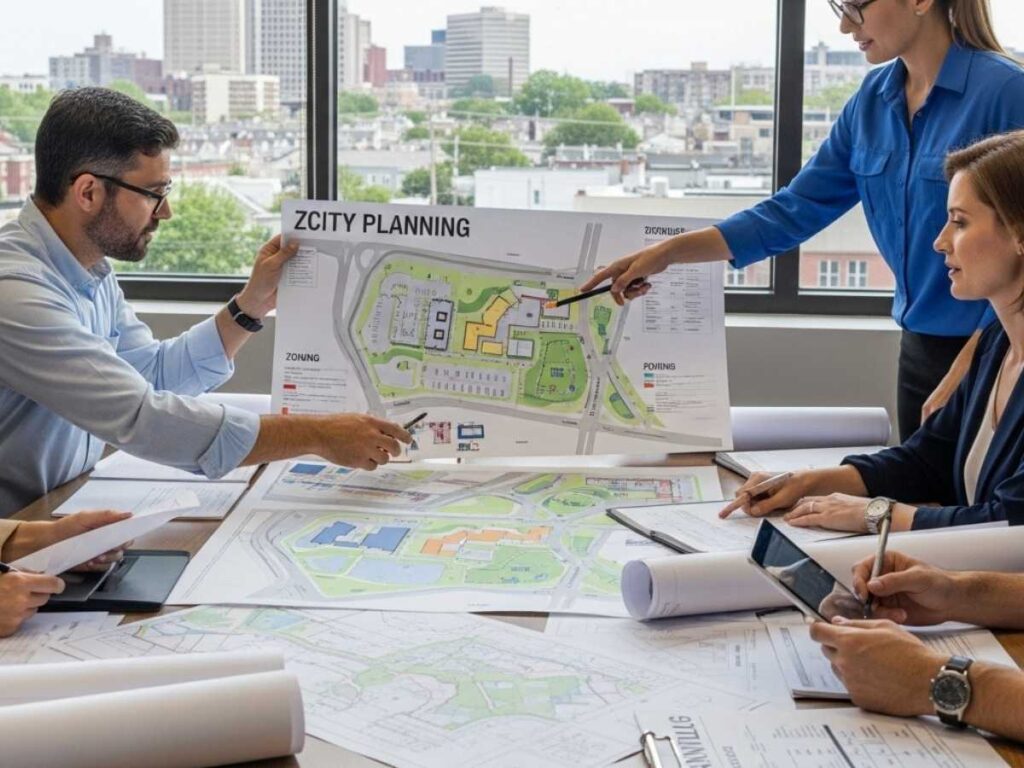
In Idaho Falls, permitting involves multiple city departments that review a project’s compliance with building codes, zoning regulations, and public infrastructure standards.
The sequence typically begins with a pre-application meeting. This step allows your consultants to gauge city requirements before submitting formal plans. Site plan review follows, where planning staff evaluate density, parking, access, and aesthetics. Larger projects or those near established neighborhoods may require review by the Idaho Falls Planning and Zoning Commission.
Once approved, the Building Division handles structural plan review and issues the necessary permits for construction.
To avoid unnecessary delays:
- Submit all required documents accurately and completely
- Respond quickly to plan revision requests
- Allow buffer time in your schedule for neighborhood feedback or appeals
Some projects can pass approvals in 90 days. Larger apartment builds or infill developments in tighter zones may need six months or more. We help facilitate this process by coordinating submittals and working closely with your design team to meet city requirements as efficiently as possible.

Engaging a General Contractor at the Right Time
Too often, developers wait to contact a contractor until final plans are complete. That’s a mistake. Bringing in a builder earlier saves time and rework.
Working with a general contractor during concept development offers several advantages:
- Preliminary budgeting helps verify feasibility before permit drawings begin
- Input on construction sequencing and methods allows better structural detailing
- Insight on material availability and subcontractor capacity informs schedule planning
General contractors don’t serve as your architect and won’t handle land acquisition or entitlements. However, we do provide critical guidance on costs, schedule risk, and construction logistics.
At Curt Wells Construction, we often support early-stage planning through preconstruction consulting. That early involvement helps reduce the unknowns that often cause project delays or inflated costs later on. For details about these phase-specific responsibilities, see our breakdown of what’s included in general contracting services.

Setting Expectations for Budget, Timeline, and Risk
Every multifamily project faces challenges—scope creep, budget changes, permitting surprises, and subcontractor fluctuations. Setting expectations early and building in margin for change is essential for success.
We recommend these practical strategies:
- Build a 10–15% contingency into yourtotal budget for design changes, permit adjustments, and soft costs, consistent with industry budgeting guidance from the American Institute of Architects.
- Plan for an 18-month total multifamily project timeline from initial planning to certificate of occupancy.
- Maintain clear communication across your full team—developer, architect, engineers, and contractor.
We work with developers to apply value engineering techniques, clarify scope boundaries, and align sequencing with trade partner availability. That effort pays off in lower bid volatility and tighter scheduling once construction begins.
Bringing realism to your planning helps control exposure without compromising build quality or project scale. Whether it’s a large apartment building or a smaller townhome development, early engagement and steady coordination are what move projects from paper to occupancy.
Frequently Asked Questions
Planning a multifamily housing development typically takes 12 to 24 months from initial site evaluation to construction start. The permitting phase alone can take three to six months, depending on project size and local review requirements. Timelines vary based on zoning approvals, design revisions, financing, and whether additional approvals like variances are required.
A multifamily housing feasibility study evaluates financial, legal, and market viability before design begins. It typically includes rental market analysis, projected construction costs, land acquisition pricing, unit mix planning, and estimated soft costs such as permits and professional fees. This process helps determine whether expected rental income supports development expenses and financing obligations.
Zoning laws determine where multifamily housing can be built and what density is allowed. Regulations may limit building height, unit count, lot coverage, setbacks, and parking requirements. Even properties designated for multifamily use can have restrictions that impact design feasibility. Reviewing local land development codes early prevents costly redesigns and entitlement delays.
A general contractor should be involved during the concept design phase of a multifamily housing development. Early contractor input improves cost accuracy, identifies constructability concerns, and reduces redesign risks. Preconstruction services also help align scheduling, material availability, and budgeting before permit drawings are finalized, minimizing unexpected cost increases later.
The biggest risks in planning multifamily housing development include underestimating construction costs, delays in permitting, zoning restrictions, and market shifts. Scope changes during design can also increase expenses. Building a contingency budget of 10–15% and maintaining coordination among developers, architects, engineers, and contractors helps reduce financial and scheduling risks.