
What’s Included in General Contracting Services?
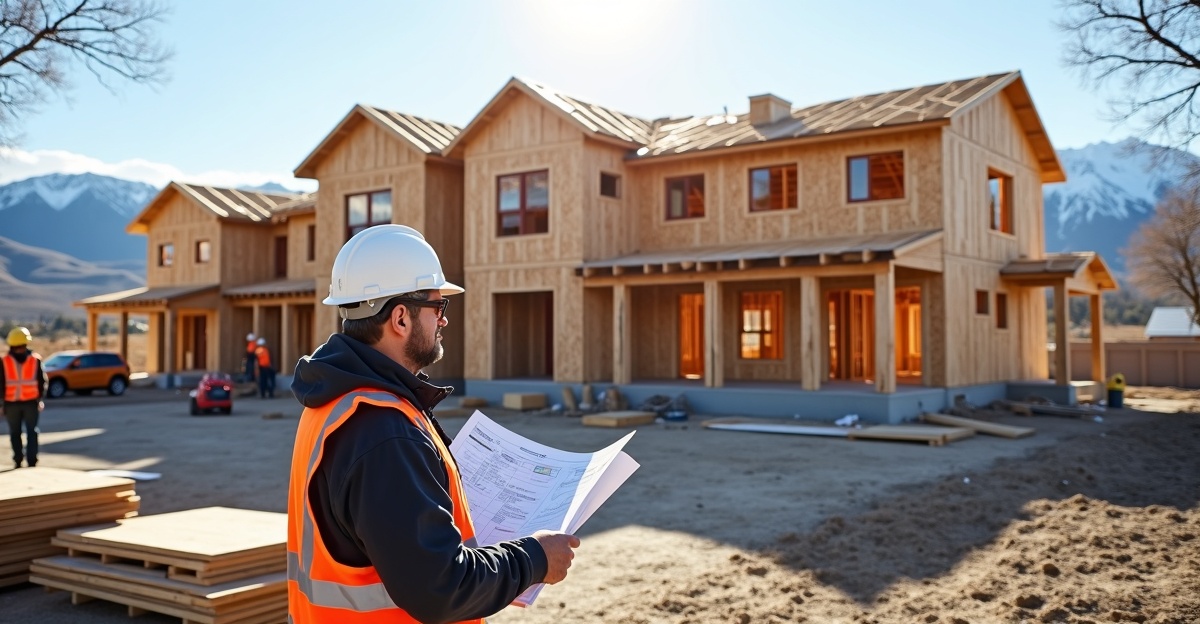
Understanding the full general contracting scope helps clarify each phase—from initial planning to final walkthrough. At Curt Wells Construction, we manage permits, coordinate subcontractors, track budgets and timelines, and oversee every step to bring your project to completion.
Key Takeaways
- General contractors serve as the main contact, handling every stage of construction for the property owner.
- The scope covers early planning, permit management, budgeting, scheduling, and daily construction oversight.
- Coordinating subcontractors and supervising the site ensures jobsite safety, proper sequencing, and consistent quality.
- Projects in Idaho Falls require smart scheduling to work around local weather cycles and permit timelines.
- Final steps include completing the punch list and turning over the project, confirming everything meets expectations.
Defining the General Contractor’s Role from Day One
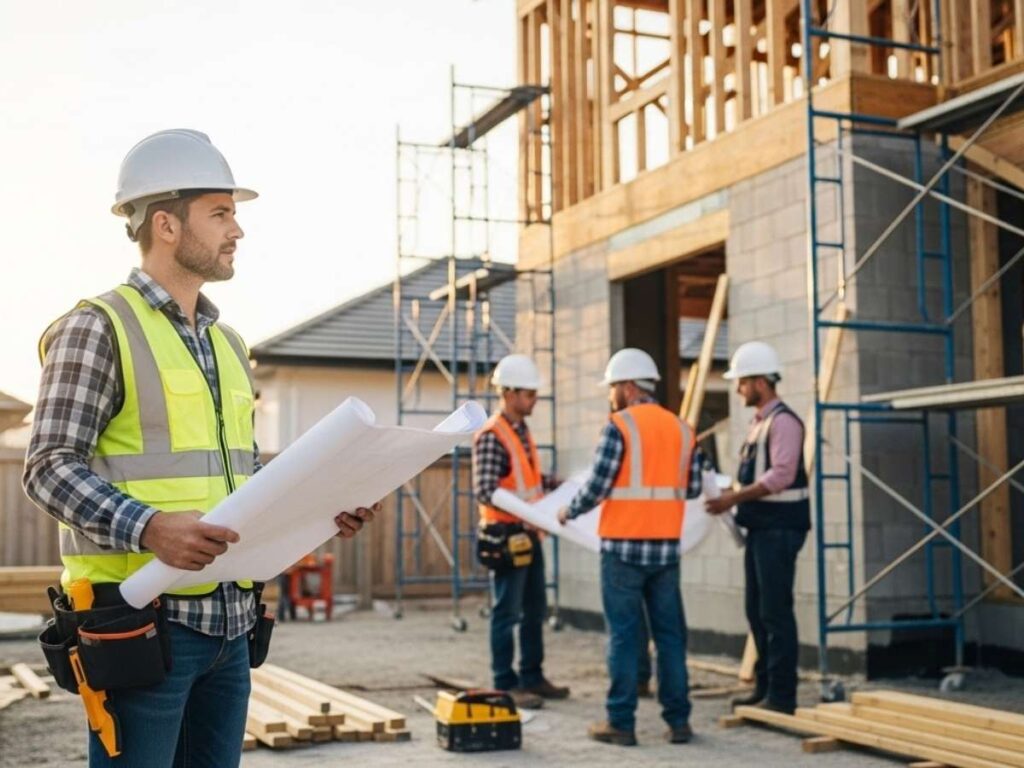
A general contractor oversees the entire construction process on behalf of the property owner. We act as the single point of accountability, managing planning, timelines, budgets, subcontractors, and the build itself. That means less stress and fewer surprises for the client.
Curt Wells Construction delivers experienced general contracting services for residential and multifamily projects in Idaho Falls. From day one through final inspection, we guide clients across every stage.
One of the most common questions we hear is, “What does a general contractor do?” The answer: we handle far more than lining up labor. We manage planning, coordination across vendors and trades, on-site execution, and overall construction oversight. It’s a full-service approach. With our general contracting scope explained clearly from the beginning, clients have clarity on what’s being handled and when.
Mapping the Full Project Lifecycle: From Preconstruction to Completion
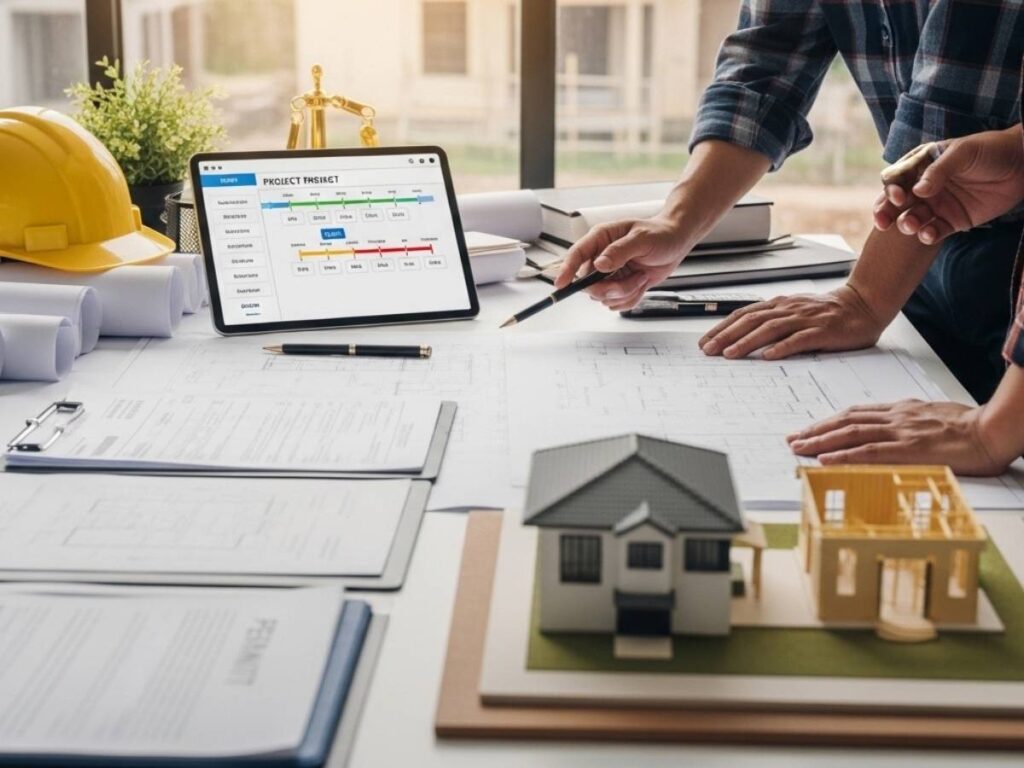
Every project follows a clear and structured path, and understanding the custom home construction timeline helps clients anticipate each phase from planning to final walkthrough. We manage each step with consistency and transparency, allowing clients to track progress and make decisions with confidence. The phases we oversee include:
Main Stages of General Contracting Services
- Initial consultation and scope discussion
- Preconstruction planning and feasibility
- Support through the permitting process
- Development of a realistic budget and schedule
- Site prep, core construction, and milestone tracking
- Final walkthrough, punch list resolution, and handoff
Throughout the process, we keep communication open and practical. Clients see where their investment goes and understand how the schedule responds to variables. We don’t promise rigid fixed prices, but we do provide straightforward cost guidance, updated regularly.
This structured process comes from years of hands-on experience in construction project management. Our approach has proven effective across both custom residential and multifamily builds, and it defines our residential general contracting services in Idaho Falls.
What Happens in the Preconstruction Phase
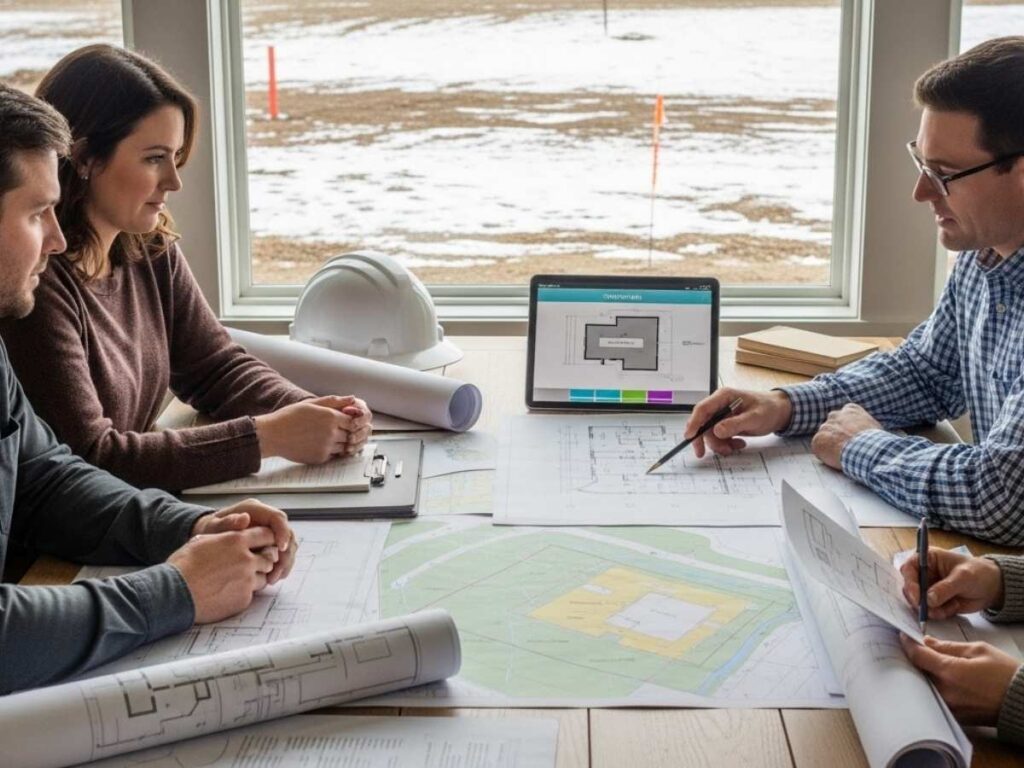
Preconstruction is the backbone of any successful project and plays a major role in avoiding construction delays. Our work during this early phase helps avoid unnecessary adjustments or rework.
We focus on:
- Site analysis and feasibility review
- Working with client-selected architects or connecting them to the right professionals
- Managing all required documentation and supporting the Idaho Falls permitting process
- Creating a preliminary budget based on the known scope and adjusted as needed
- Forecasting a timeline based on project size and Idaho’s seasonal realities
Preconstruction planning in Idaho demands special attention due to temperature swings and ground conditions. Snow, frost depth, and available daylight—based on historical climate data from NOAA for Idaho Falls—all influence excavation, framing, and exterior work. With extensive experience in Idaho Falls, we plan schedules realistically to avoid weather-based delays.
This work reduces surprises and puts the build on solid footing before construction starts.

Coordinating Subcontractors and Vendors
A key part of our general contractor services in Idaho Falls is coordinating subcontractors and sourcing materials. We’ve built long-standing relationships with local trades that consistently show up ready to deliver quality. This helps us keep projects on schedule and within budget expectations.
We’re responsible for maintaining job site safety and enforcing sequencing in alignment with OSHA construction safety standards—making sure the right teams are on site at the right time. We avoid overlapping trades that can slow each other down or lead to rework.
Material deliveries are tracked and scheduled to prevent pileups or delays. As work progresses, we keep property owners informed with routine updates. That gives everyone a straightforward view of performance, schedule, and if anything needs attention.
We’ve spent years building a trusted network throughout the region. That experience gives us a dependable advantage in local execution.
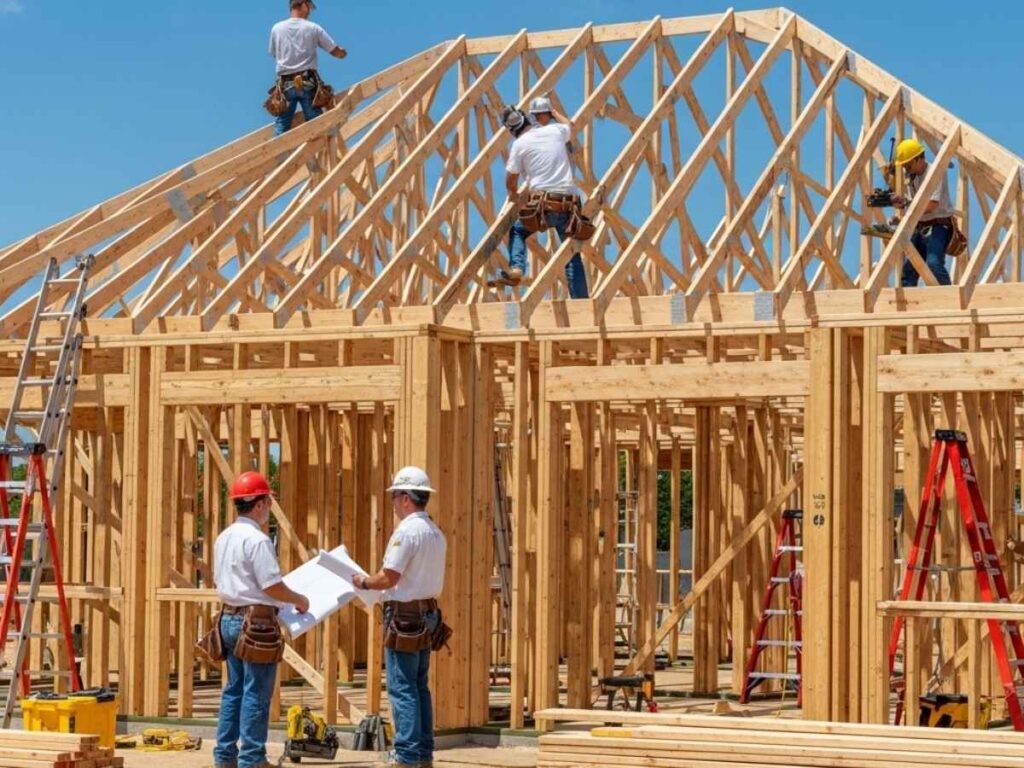
Framing and Core Structural Work
Once groundwork is completed, the physical build takes form. Framing and core structural work are among the most visible and critical stages of any construction project.
Here’s what we include under our framing and buildout services:
- On-site supervision of framing crews during wall, roof, and subfloor assembly
- Coordination of mechanical rough-ins for HVAC, plumbing, and electrical systems
- Roofing and shell completion to protect interiors ahead of finish work
This phase connects foundational work to the overall structure. What’s on paper becomes real. We actively supervise this period, checking progress against the building plans and code requirements outlined by the International Code Council. This helps avoid future corrections and keeps inspections on track.
We also bring a high-performance mindset to this stage. For clients focused on energy-efficient methods or long-term durability, we coordinate closely with framers and mechanical teams to meet expectations. For more insights on structural services, see our dedicated page on structural framing.
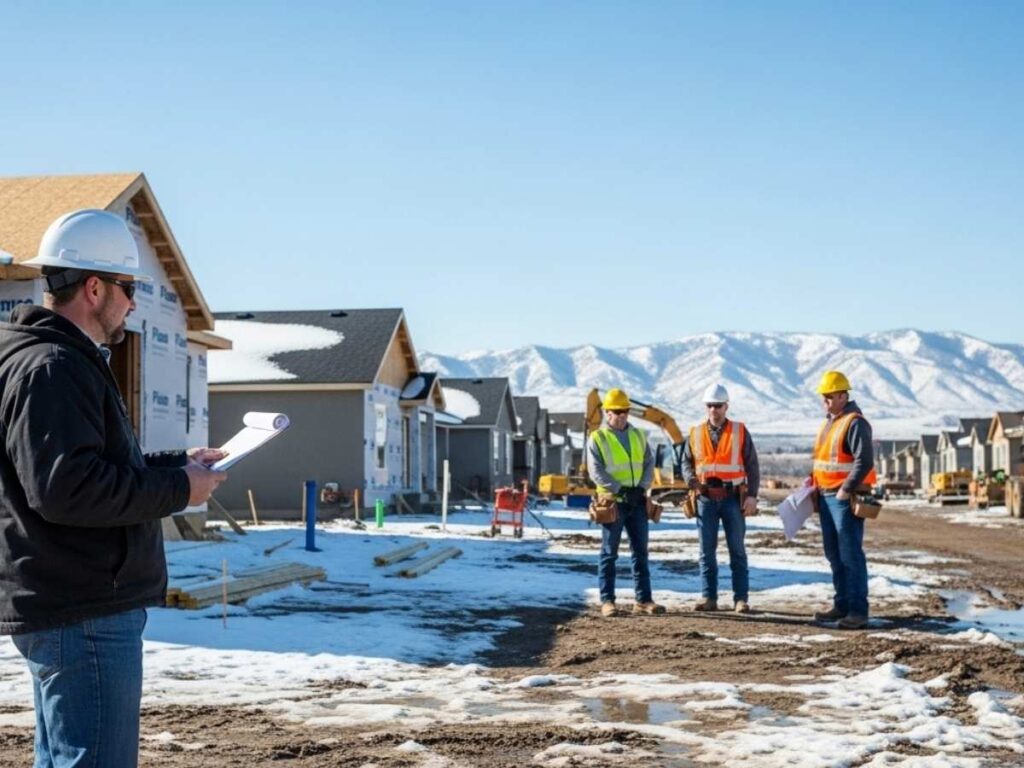
Building in Idaho Falls: Local Expertise Matters
Idaho Falls presents unique challenges and opportunities to contractors. Success here requires more than general experience—it demands specific knowledge of the region.
Build schedules are sensitive to seasonal elements, which is why choosing the best season for home construction is an important early planning decision. Deep cold in winter limits some exterior tasks. Spring thaw and fall freeze can disrupt excavation and concrete work if not timed correctly. That’s why we use historical weather data to shape project timelines from the outset.
The Idaho Falls permitting process is another critical consideration. Requirements change. Inspection windows shift. We work directly with municipal offices and stay up to date on expectations outlined by the City of Idaho Falls Building Department. This makes passing inspections more predictable and avoids backtracking.
Our familiarity also helps in hiring. For projects like multifamily construction, where many trades are moving in tandem, local subcontractor availability affects more than just labor—it affects sequencing and overall pace.
As a multifamily construction contractor and custom home builder, we’ve run projects across this region for decades. That depth means fewer delays, more efficient planning, and stronger accountability at every level. For nearby projects, working with a general contractor Shelley homeowners can trust helps keep planning, permitting, scheduling, and subcontractor coordination aligned from the start.
Handshake relationships only go so far. We back up our recommendations with long-term relationships and consistent delivery. For clients building in Idaho Falls, that matters a great deal.
For more information about everything we include under general contractor services, visit our main Curt Wells Construction site or get in touch through our contact page. We’re ready to assist from day one.
Frequently Asked Questions
A general contracting scope typically includes project planning, budgeting, scheduling, permit coordination, subcontractor management, and on-site supervision. It outlines every phase from preconstruction through final inspection. The scope also defines responsibilities, timelines, and quality standards. Clearly explaining the general contracting scope helps property owners understand who handles each task and how the project moves from concept to completion.
A general contractor manages the entire construction project, while subcontractors focus on specific trades like plumbing, electrical, or framing, as defined by construction industry role classifications. The general contractor coordinates all trades, oversees scheduling, ensures code compliance, and communicates with the property owner. Subcontractors report to the general contractor rather than the client. This structure keeps the project organized and reduces miscommunication.
Preconstruction planning is important because it identifies potential challenges before building begins. This phase includes feasibility review, site evaluation, preliminary budgeting, and timeline forecasting. Addressing these factors early reduces costly changes and delays during construction. A well-defined preconstruction plan also improves accuracy in cost estimates and ensures permit requirements are met before work starts.
General contractors manage construction timelines by developing a detailed schedule that sequences each trade efficiently. They coordinate subcontractor availability, material deliveries, inspections, and weather considerations. Adjustments are made as conditions change to maintain progress. Ongoing schedule tracking ensures milestones are met and helps prevent overlapping tasks that could cause delays or rework.
The final walkthrough is the last step in the general contracting process where the completed project is reviewed with the property owner. During this stage, a punch list is created to document any remaining adjustments or minor corrections. Once those items are resolved, the project is formally handed over. This ensures the work meets agreed-upon standards and expectations.