
How Does Weather Affect Home Construction Projects?
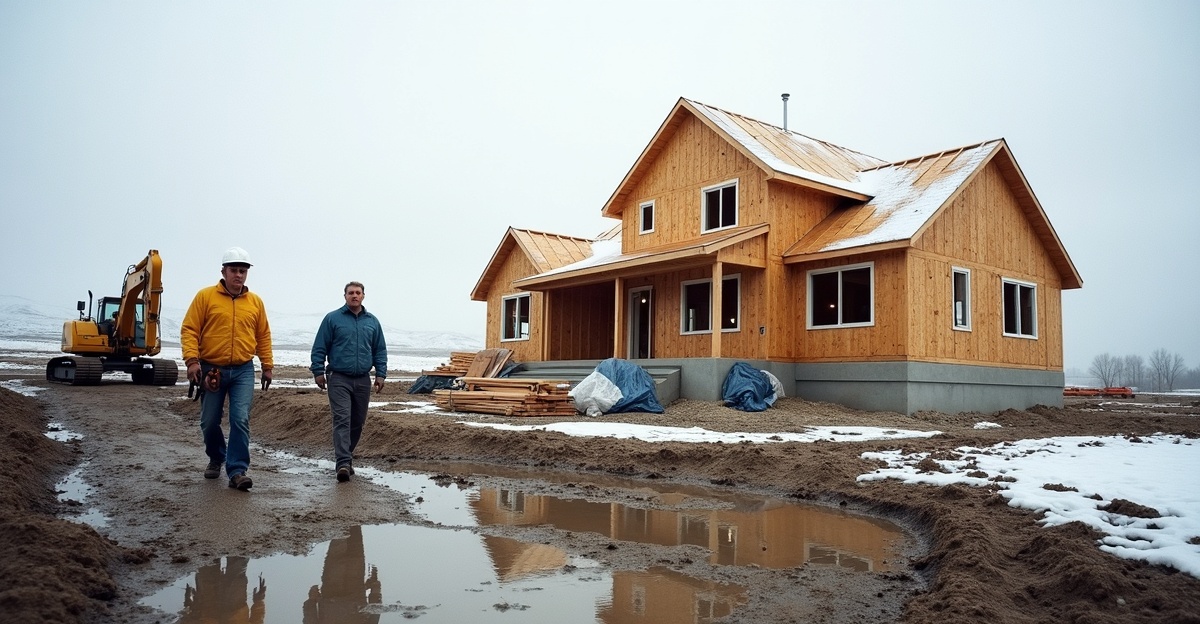
Weather delays in construction remain a constant factor in Eastern Idaho, where extended winters, freeze-thaw cycles, wind, and seasonal moisture directly affect excavation, concrete, framing, and exterior work. We see these patterns every year. When we understand how weather affects home construction projects, we can anticipate schedule shifts, critical path impacts, subcontractor coordination changes, and potential cost adjustments tied to seasonal conditions.
Key Takeaways
- Extended sub-freezing temperatures slow excavation, force deeper frost-protected foundations, and extend concrete curing times. We see framing and all downstream trades shift as a result.
- Spring thaw and saturated soils limit site access, complicate trenching and backfill, and create scheduling ripple effects across multiple crews and inspections. These conditions demand tight coordination.
- Wind, rain, and temperature swings narrow safe installation windows for roofing, siding, painting, and crane operations. Dry-in dates and interior progress often move as a result.
- Weather-related schedule changes affect the project’s critical path, raise holding costs, increase loan interest carry, and create subcontractor rescheduling challenges. We factor these risks into every timeline.
- Experienced contractors reduce disruption by building buffer time into schedules, sequencing weather-sensitive phases with care, protecting materials on site, and communicating changes clearly and early.
Weather Delays in Construction: What to Expect in Eastern Idaho
Weather delays in construction are schedule impacts caused by temperature, moisture, snow, wind, and seasonal transitions. In Eastern Idaho construction, those impacts are stronger and last longer than in many other regions.
The Idaho Falls climate brings extended winters, repeated freeze-thaw cycles, deep frost depth requirements, heavy snow loads, and seasonal wind events. While weather delays home construction US-wide, the construction delays weather impact is more pronounced here due to long cold seasons and rapid seasonal swings.
Extended sub-freezing temperatures affect excavation and concrete. Spring thaw creates mud and access issues. Summer winds can slow framing and crane work. Fall temperature drops tighten exterior finishing windows.
Delays can’t be eliminated. We can manage them through smart scheduling, clear sequencing, and steady communication. Certain phases are more exposed than others, and when one shift occurs, it often triggers a ripple effect across trades. That’s where experience and disciplined planning matter most.
How Winter Affects Excavation and Concrete
Winter conditions drive a large share of weather delays in construction across Eastern Idaho.
Foundations must extend below local frost depth to prevent movement during freeze-thaw cycles. If footings sit above frost depth, expanding soil can shift the structure as moisture freezes and thaws. Proper depth and soil prep are non-negotiable in this climate.
Excavation slows once the ground freezes. Frozen soil can require additional equipment, extra time, and sometimes pre-thawing methods before digging can resume. Snow accumulation also halts footing pours, foundation walls, and slab-on-grade work until surfaces are cleared and prepped.
Concrete work is especially sensitive. Concrete curing temperatures play a critical role in schedule planning. When temperatures drop near 32°F, curing slows significantly. If temperatures stay below freezing, we must use cold-weather placement practices such as heated enclosures or additives. Without them, the concrete can lose strength or cure improperly.
Here’s the direct impact: when temperatures remain below freezing, concrete cure times extend. That can delay framing by several days or more depending on conditions. In tight schedules, that shift alone can move the entire timeline.
Winter also affects vertical work. Snow loads create safety concerns on partially framed structures. Icy surfaces slow crews and increase risk. Roofing activities often pause until decks are cleared and conditions are safe. Even multifamily construction delays occur when crane operations are suspended due to high winds or unstable footing conditions.
Each pause may seem small on its own. In practice, weeks of intermittent cold-weather interruptions add up quickly.
Spring Thaw, Mud Season, and Site Access Challenges
Spring thaw construction presents a different set of problems. As frost leaves the ground, soils across Eastern Idaho become saturated. Mud season Idaho contractors plan for is real and often persistent.
Soft ground limits heavy equipment access. Excavation may need to pause until soils stabilize. Foundation backfill can’t proceed properly in overly wet conditions because compaction suffers, which can affect long-term performance.
Rain compounds the issue. Trenching for utilities and underground work becomes difficult in saturated soil. Excavated trenches may collapse or require rework. That adds labor and stretches the schedule.
Wet conditions also affect materials above grade. Moisture content in framing lumber can rise during prolonged wet weather. If framing absorbs excess moisture, inspections or insulation work may be delayed until levels normalize. Interior progress slows if the structure isn’t protected and dried in properly.
The impact follows a clear cause-and-effect chain:
- Delayed excavation leads to delayed foundation work.
- Foundation delays push back framing.
- Mechanical, electrical, and plumbing rough-ins must wait.
- Finish phases shift accordingly.
A single week of heavy moisture can reschedule multiple trades and add complexity to subcontractor coordination.
This is where the construction delays weather impact becomes visible. We don’t just lose a few days. We reshuffle crews, inspections, and material deliveries. In a tight labor market, that rescheduling can extend timelines further than most expect.
Wind, Rain, and Exterior Work Delays
Wind is a major factor in Eastern Idaho construction scheduling. Strong gusts can slow or halt framing, sheathing, and crane lifts. Crews stand down in unsafe wind conditions. Safety rules aren’t optional.
Roofing and siding often require dry surfaces for proper installation and manufacturer compliance. Roofing delays due to weather are common during extended wet periods. Sealants and underlayments perform best within specified temperature ranges. Exterior finish temperature requirements also apply to painting, coatings, and certain siding products.
Rain affects the building envelope. If exterior sheathing, housewrap, or roofing can’t be completed, the structure remains exposed longer. That delays the point at which the building is fully dried in. Interior work must proceed cautiously until we confirm the structure is protected.
In climates where weather delays home construction US-wide, we often compress exterior trades into limited dry-weather windows. In Idaho Falls, those windows can close quickly with an early storm or temperature swing. Custom homes and multifamily projects feel this pressure when multiple buildings move through the same exterior phase at once.
For property owners evaluating roofing-specific timing, understanding roof replacement timing principles can help frame conversations about seasonal scheduling and weather windows, even outside Florida markets.
When replacement becomes necessary, selecting the right crew for roof replacement ensures that weather constraints are factored into planning and execution.
The Ripple Effect: Timeline and Financial Implications
Construction schedules revolve around critical path scheduling. The critical path identifies tasks that directly control the project end date. If one of those activities moves, the completion date often moves with it.
Consider this common sequence. A concrete pour is delayed due to freezing temperatures. Framing pushes back several days. Mechanical, electrical, and plumbing rough-ins must be rescheduled. Insulation and drywall shift accordingly. Finish trades adjust, and inspections slide.
That is the construction delays weather impact in real terms.
Financial consequences follow these timeline changes:
- Extended interest carry on construction loans.
- Increased holding costs construction developers must absorb.
- Subcontractor coordination challenges and potential rescheduling fees.
- Material storage and protection costs during prolonged exposure to weather.
In larger multifamily projects, these shifts multiply across units and buildings. A delay in one structure can affect shared crews and shared equipment across the entire site.
Weather doesn’t just move dates on paper. It changes labor flow, cash flow, and resource allocation. That’s why disciplined subcontractor coordination and realistic sequencing are essential from day one.
How Experienced Contractors Plan for Weather and What You Should Ask
Planning for weather means building it into the schedule from the start. It’s an operational strategy, not a hopeful assumption.
In Eastern Idaho construction scheduling, we align major phases with known seasonal patterns. We avoid placing temperature-sensitive work deep into winter if possible. We allow more time for exterior stages during unpredictable months.
Buffer time construction schedule planning is part of that effort. We build contingency into the critical path for known weather risks. That buffer isn’t wasted time. It protects the overall delivery date.
Smart sequencing also reduces exposure. We prioritize drying-in structures quickly to limit moisture risks. We protect materials on site with proper storage and covering. Crews monitor forecasts daily and adjust work plans in real time.
Clear communication is just as important. If weather delays in construction occur, we explain:
- Which phase is affected.
- How it impacts the critical path.
- What recovery steps are realistic.
Clients shouldn’t have to guess.
When evaluating a builder for custom home timelines Idaho owners should ask direct questions:
- How do we build weather contingencies into the schedule?
- Which phases of the project are most weather-sensitive?
- How will schedule changes be communicated?
- What budget impacts could weather create?
Realistic expectations matter. In Idaho Falls and surrounding communities, climate influences construction in measurable ways. Experience doesn’t remove weather risk, but it does reduce surprises.
Steady planning, disciplined execution, and honest updates keep projects moving. That’s the standard we hold for every build, regardless of season.