
What Is Stick Framing and Why Is It Used?
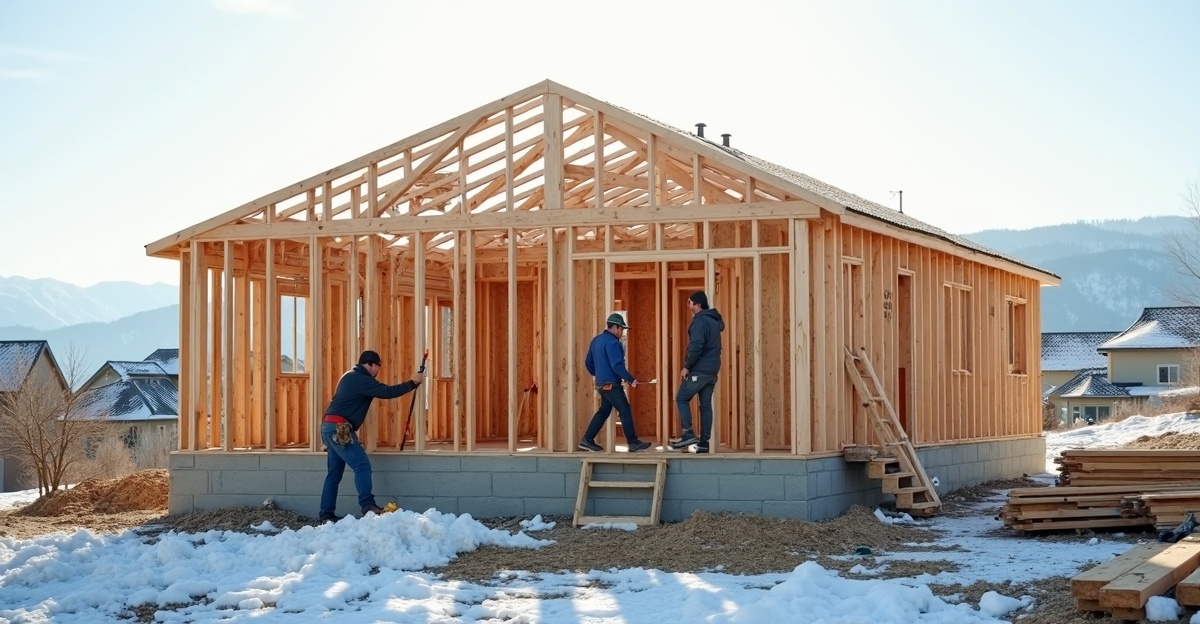
Stick framing in residential construction involves assembling walls, floors, and roof systems piece by piece on site with dimensional lumber. We build the structural skeleton directly over the foundation. Crews favor this method because it allows design flexibility, real-time field adjustments, coordinated trade work, and consistent structural performance. In regions like Eastern Idaho, snow loads, inspections, and custom layouts often shape our framing decisions, and stick framing gives us the control we need on site.
Key Takeaways
- Stick framing assembles studs, joists, and rafters on site rather than using factory-built panels or modules.
- The process follows a clear sequence: layout, floor systems, wall assembly, roof framing, and structural sheathing.
- On-site construction allows measured design adjustments during custom and multifamily projects.
- Proper load paths, connections, and code-compliant installation are critical for long-term durability and snow load performance.
- Compared to panelized and modular systems, stick framing offers greater adaptability for complex layouts and changing project conditions.
Stick Framing in Residential Construction: Definition and Core Function
Stick framing in residential construction is a method where walls, floors, and roofs are assembled piece by piece on site using dimensional lumber. Builders cut and install individual studs, joists, and rafters at the job site rather than setting prebuilt wall panels or factory-produced modules.
In stick-built homes, the full structural skeleton is constructed directly on the foundation. Crews frame each wall section according to engineered plans, fasten floor systems in place, and build roof structures on location. This approach remains one of the most common residential framing methods in Idaho Falls and across Eastern Idaho.
The method directly affects several major factors:
- Structural layout and load paths
- Design flexibility during construction
- The overall framing stage of construction
- Inspection timing and sequencing
- Coordination with plumbing, HVAC, and electrical trades
Because everything is assembled on site, the on-site framing process allows real-time adjustments when necessary. That level of flexibility is especially valuable in custom home construction and complex floor plans.
Stick framing also plays a central role in long-term structural performance. Stud alignment, sheathing installation, and connection reinforcement all influence durability. We explore this further in our discussion of how framing impacts build quality.
How the On-Site Framing Process Works from Start to Finish
The framing stage of construction follows a logical sequence. Each step builds on the previous one, and early precision reduces costly corrections later.
Step-by-Step Framing Sequence
- Layout on the foundation – Crews transfer wall locations from the plans to the slab or foundation. Accuracy at this stage controls the entire structural layout.
- Floor system installation – Builders set floor joists or engineered floor systems and install subfloor sheathing to create a solid working surface.
- Wall assembly – Studs are spaced according to engineered drawings and local code, typically 16″ or 24″ on center as permitted under the International Residential Code wall framing provisions.
- Standing and bracing walls – Once lifted into place, walls are aligned, plumbed, and temporarily braced before permanent fastening.
- Roof framing – Crews install prebuilt trusses or construct rafters on site, depending on the project design.
- Exterior wall and roof sheathing – Sheathing ties the structure together and provides rigidity before mechanical trades begin rough-in work.
During custom builds, the on-site framing process allows measured refinements. Openings can be adjusted, ceiling details reviewed, and certain structural elements clarified directly in the field.
Trade coordination occurs immediately after structural framing. Plumbers, HVAC crews, and electricians depend on consistent framing layouts for routing systems efficiently. Inspections typically take place after structural framing is complete and before insulation begins. Local inspectors review connections, nailing patterns, hardware installation, and compliance with Idaho Falls residential building code requirements.
Framing is also one of the most visual stages for property owners. Room sizes, ceiling heights, and traffic flow become tangible once the skeleton is standing.
Why Stick Framing Is Commonly Used in Idaho Falls and Eastern Idaho
Stick framing is widely used in this region because it aligns with local climate conditions and construction patterns.
Eastern Idaho experiences significant snow loads as defined under minimum design snow load requirements established by ASCE 7 standards. Wood framing systems, when engineered and built to code, perform well under these demands. Continuous load paths from roof to foundation are critical, and properly connected dimensional lumber systems provide strong long-term performance.
Weather variability also plays a role. Idaho’s seasonal shifts require adaptable scheduling. On-site framing allows crews to adjust sequencing based on daily site conditions.
Material access and labor availability further support this method. Lumber supply chains and experienced framing crews are well established throughout Eastern Idaho, helping maintain quality and continuity.
Design flexibility is another important factor. Custom homes often evolve during construction. Stick-built construction allows adjustments without reordering complete wall systems from a factory.
The method also scales effectively for multifamily wood framing projects. Whether constructing duplexes, townhomes, or a larger apartment building, stick framing supports varied layouts and phased scheduling.
Cost, Timeline, and Predictability During the Framing Phase
Cost planning during the framing stage is typically straightforward. Lumber pricing can fluctuate, sometimes significantly, but labor sequencing tends to remain predictable once plans are finalized.
Weather is the most common variable affecting the construction timeline during framing. Snow, rain, and high winds can temporarily pause exterior work. Thoughtful scheduling and active site management help minimize delays.
Inspections may also introduce brief pauses, particularly if corrections are required. However, inspections strengthen quality control by verifying structural connections and code compliance before the structure is enclosed.
One advantage of stick-built homes is the relative ease of mid-project design modifications. Adjusting window placements or interior layouts is typically more manageable compared to panelized or modular systems.
Owners and developers benefit from day-to-day visibility. The framing process remains exposed before insulation and drywall conceal key structural components.
Clear communication among trades reduces the risk of delays. Additional guidance can be found in our article on how to avoid delays in home construction.
For clients planning several months in advance, considerations should include framing crew availability, engineering approvals, and material procurement timelines. Our overview on how long it takes to build a custom home explains broader timeline influences.
Stick Framing Compared to Panelized and Modular Systems
Stick framing is one option among several structural systems. Panelized and modular construction methods offer different advantages based on project goals.
Panelized framing uses factory-assembled wall sections delivered to the site. This approach can reduce on-site labor time and may improve speed for production-style builds with repetitive layouts. However, late design changes can be more difficult after fabrication.
Modular construction involves building sections of a home in a controlled facility and transporting them to the site for placement. Predictability can improve in production-driven developments, especially where repetition supports efficiency.
In Eastern Idaho, stick framing in residential construction often remains the preferred method for custom homes and diverse multifamily projects because of its adaptability. Complex rooflines, irregular lot conditions, and customized layouts align well with on-site assembly.
Choosing the right system depends on:
- Project goals and customization level
- Budget structure and pricing stability
- Design complexity
- Site accessibility and crane logistics
- Desired schedule control
No single framing system fits every build. Plans, engineering, and site conditions should ultimately guide the decision.
What Property Owners and Developers Should Consider Before Choosing a Framing Method
Framing decisions influence structure, schedule, and long-term durability. Early coordination reduces downstream challenges.
Important decision factors include:
- Required level of customization
- Project scale, from a single-family home to large multifamily developments
- Budget flexibility relative to lumber price fluctuations
- Expected duration of the construction timeline framing phase
- Preference for on-site inspection visibility
Idaho-specific considerations are significant. Idaho Falls building codes emphasize snow load compliance and structural engineering review. Seasonal conditions in Eastern Idaho also influence scheduling and material protection strategies.
Stick framing remains well suited to projects that prioritize adaptability, inspection transparency, and phased execution. It continues to serve both custom home build projects and larger developments across the region.
Before finalizing a framing approach, property owners should review structural drawings, material specifications, load paths, bracing strategies, and sequencing plans with their contractor. Clear alignment during preconstruction supports smoother execution throughout the framing stage and the remainder of the build.
Frequently Asked Questions
Stick framing in residential construction offers strong design flexibility and on-site adaptability. Because walls and roof systems are built piece by piece, builders can adjust layouts, openings, and structural details during construction. It also allows easier coordination with plumbing and electrical trades. This method works well for custom homes, complex floor plans, and projects requiring compliance with local snow load and building codes.
The stick framing phase for a typical single-family home usually takes one to three weeks, depending on size, weather, and crew availability. Larger or more complex homes may require additional time. Delays often result from inspections, material availability, or adverse weather. Once the structure is sheathed and inspected, the project moves into mechanical rough-ins and exterior enclosure.
Stick framing is not inherently stronger, but it can perform equally well when properly engineered and installed. Structural strength depends on load paths, fastening methods, sheathing, and code compliance rather than the framing method alone. Stick-built systems allow builders to verify connections and reinforcements on site, which can be beneficial in regions with heavy snow or wind loads.
Common stick framing mistakes include improper stud spacing, inadequate bracing, misaligned load-bearing walls, and incorrect nailing patterns. Failing to maintain continuous load paths from roof to foundation can reduce structural performance. Poor coordination with mechanical trades may also lead to unnecessary structural modifications. Careful layout, engineering review, and inspection compliance help prevent costly corrections later.
Stick framing can be cost-effective, especially for custom or non-repetitive home designs. Material costs, particularly lumber, may fluctuate, but labor sequencing is generally predictable. Compared to modular systems, stick framing often allows easier mid-project changes without major re-fabrication expenses. Overall cost efficiency depends on project complexity, labor availability, and local material pricing conditions.