
What Are Common Issues in Framing Projects?
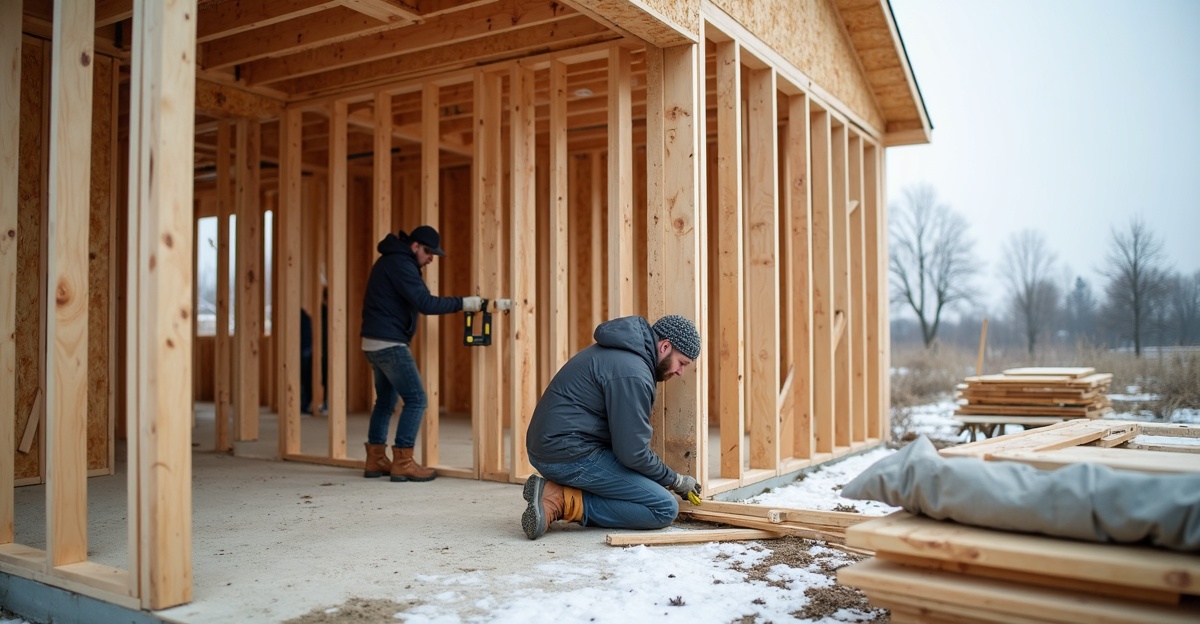
Framing construction problems start with small layout mistakes, weak load paths, moisture exposure, or missed hardware details that affect the entire structure. We see how minor errors during framing can impact the full build if we fail to catch them early. In cold climates like Eastern Idaho, inspection delays, scheduling gaps, and poor coordination between trades can quickly turn simple framing issues into expensive setbacks and structural concerns.
Key Takeaways
- Inaccurate layout, out-of-square walls, and improper load transfer rank among the most common structural framing errors, and we know they lead to failed inspections and costly rework if we do not correct them early.
- Moisture exposure in cold climates causes swelling, warping, mold risk, and long-term finish problems when we fail to protect and properly dry in lumber.
- Lumber quality control, correct nailing patterns, and proper hardware installation play a critical role in preserving structural integrity, and we treat these steps as non-negotiable on every job.
- Scheduling gaps and poor communication between contractors often create missed openings, sequencing delays, and repeated corrections that we could avoid with clear coordination.
- Consistent plan reviews, active supervision, moisture monitoring, and pre-inspection checklists help us prevent most framing problems before they impact cost or timeline.
Structural and Layout Errors That Compromise the Entire Build
Inaccurate layout is one of the most common framing construction problems seen in the field. Small measurement errors early on can carry through the entire structure and create larger structural framing errors later in the build.
Out-of-square walls, uneven floor systems, and misaligned window or door openings often begin with rushed layout work or poor verification before walls are fully secured. Once sheathing is installed, correcting those issues becomes expensive and time-consuming. Subtrades cannot proceed until framing inspection issues are resolved.
Improper load paths are another serious concern, particularly when they violate International Residential Code continuous load path requirements. Incorrectly set beams, missing posts, or truss installation mistakes compromise how loads transfer to the foundation. In Eastern Idaho building conditions, overlooking heavy snow loads or regional wind requirements increases long-term structural risk. Roof systems must reflect actual site demands, not assumptions.
The common causes are straightforward. Crews may feel pressure from tight scheduling. Plans might lack clarity. Supervision can be inconsistent. Verification steps are sometimes skipped before sheathing begins.
The impact on cost and timeline is immediate. Rework after failed framing inspection issues can delay mechanical rough-ins, insulation, and drywall by days or weeks. Labor and material costs climb quickly when walls must come apart and be rebuilt.
Prevention requires discipline. Before breaking ground, we conduct detailed plan reviews. During layout, we verify dimensions at each phase. We confirm load calculations and coordinate with engineers when required. We also check bracing and alignment before calling for inspection.
For a deeper look at how framing decisions affect long-term performance, this breakdown on how framing impacts build quality explains why early precision matters in Idaho Falls construction.
Moisture Exposure and Wood Framing Problems in Cold Climates
Moisture damage in framing is a serious risk in Idaho Falls construction. Snow, rain, freeze-thaw cycles, and sharp temperature swings create challenging Eastern Idaho building conditions.
Wood framing problems often begin when lumber absorbs excessive moisture before the structure is dried in. Framing that sits uncovered too long or sites with poor drainage increase that exposure. Temporary buildup of snow or standing water around the foundation can add to the issue.
Excess moisture leads to swelling, mold risk, and long-term dimensional movement, as documented by the Oak Ridge National Laboratoty research on wood moisture performance. Subfloors may warp. Walls can shift slightly during drying. Months later, those movement patterns show up as drywall cracking or uneven finishes. High moisture readings can also trigger framing inspection issues, delaying progress until the lumber dries adequately.
Many framing issues in construction stem from avoidable exposure. If scheduling ignores seasonal weather patterns, crews may frame during periods of heavy precipitation without sufficient protection.
We take practical steps to reduce risk. Whenever possible, we schedule framing during favorable weather windows. We use tarps or wraps when conditions shift unexpectedly. Most important, we move quickly to dry-in by installing roofing and house wrap as soon as feasible. Monitoring lumber moisture levels before insulation ensures the building is ready for the next phase.
Cold climates require active management. Waiting and hoping for improvement is not a strategy.
Lumber Quality, Fastening, and Hardware Installation Mistakes
Material quality directly affects structural performance. Common framing mistakes often start with improper lumber selection on site.
Warped or heavily crowned boards must be sorted and used appropriately. Installing lumber without checking straightness creates uneven walls and floors. Over time, those irregularities show up as movement and finish issues.
Fastening errors create deeper structural framing errors when they fail to meet American Wood Council fastening schedule requirements. Missing joist hangers, incorrect nailing patterns, or undersized fasteners can weaken load connections. Inspection failures frequently trace back to overlooked hardware details. These framing inspection issues stop the project until corrections are complete.
Several factors contribute. Material shortages during peak seasons sometimes push crews to use marginal boards. Inconsistent oversight increases the chance that hardware requirements are missed. Time pressure can lead to shortcuts.
The consequences are predictable. Call-backs increase. Floor systems develop movement. Walls require correction before insulation or drywall. Construction scheduling delays stack up when errors are discovered late in the sequence.
Prevention is practical, not complex. We inspect lumber upon delivery and separate usable material from questionable pieces. Crews verify nailing schedules that match engineered plans. Supervisors perform checks before inspections are requested.
Framing is structural work. Attention to material quality and fastening details protects the entire project.
Scheduling Gaps and Contractor Communication Problems
Construction scheduling delays often begin before framing starts. If foundations are late, trusses arrive early, or inspectors are not coordinated, the framing crew sits idle or works around shifting conditions.
Contractor communication problems between the general contractor, framer, and subcontractors create avoidable rework. Missed openings for plumbing, HVAC, or electrical systems can force crews to cut into framing after rough-ins begin. That leads to more framing issues in construction and additional inspections.
These challenges increase on larger projects. On multifamily construction projects, sequencing errors may affect several units at once. Multifamily framing challenges amplify quickly when coordination breaks down. A missed detail in one unit often repeats across the building.
Responsibility does not fall on one party alone. Weather, site access, supply chains, and inspector availability can all contribute to construction scheduling delays. Still, clear coordination reduces the risk.
We rely on realistic schedules with buffers for weather. Pre-framing coordination meetings clarify opening locations and structural details. Documented scope agreements reduce assumptions. Clear chains of responsibility help resolve contractor communication problems before they impact the field.
Property owners sometimes ask about isolating framing from the rest of the project. This overview on hiring a contractor for framing only explains where coordination still matters even if trades are separated.
Code Compliance and Framing Inspection Issues
Framing inspection issues frequently involve missed hardware, improper bracing, or unblocked fire stopping. Deviations from approved plans are another common problem.
In Idaho Falls construction, compliance must reflect local snow loads, wind exposure, and cold-weather requirements. Eastern Idaho building conditions are not optional considerations. They shape structural details from the roof system down to anchor bolts.
Failed inspections create immediate ripple effects. Insulation and mechanical rough-ins cannot proceed. Drywall installation is delayed. Schedules compress, and crews must rearrange timelines.
The causes are consistent. Contractors may work from outdated plan sets. Teams may assume certain code interpretations without verifying local requirements. Formal inspection checklists are sometimes skipped under time pressure.
We address this with structured pre-inspection walkthroughs. Approved plan sets stay on site and up to date. Supervisors confirm hardware, bracing, and blocking before the inspector arrives. Proactive coordination with local officials helps clarify expectations early.
Reliable structural framing services should demonstrate consistent inspection performance. Strong processes reduce inspection surprises and keep projects moving.
How to Evaluate a Framing Contractor Before You Build
Framing sets the structure for the entire building. Careful evaluation reduces custom home framing concerns and limits multifamily framing challenges before work begins.
We recommend asking direct questions such as:
- How do we verify layout accuracy before walls are fully secured?
- What moisture protection steps do we take during winter or wet conditions?
- Who supervises the framing crew daily on site?
- How are framing inspection issues handled if they arise?
- What systems reduce contractor communication problems between trades?
Clear answers should describe real processes. Look for structured scheduling practices, material quality control steps, and documented inspection procedures. Vague assurances rarely prevent framing construction problems.
Experience with Idaho Falls construction and Eastern Idaho building conditions matters. Snow loads, freeze-thaw cycles, and regional wind requirements demand practical field knowledge. That applies to custom home builds as well as townhome projects and apartment building construction.
Some owners also want clarity on timelines. This overview of the typical framing timeline outlines what realistic sequencing looks like under normal conditions.
Steady oversight makes the difference. Framing requires accuracy, coordination, and accountability from the first layout marks to the final inspection. With disciplined management, most framing construction problems can be prevented long before they affect the finished structure.
Frequently Asked Questions
Framing construction problems typically result from inaccurate layout, improper load transfer, moisture exposure, or missed hardware details. Tight schedules and poor supervision often allow small mistakes to go unnoticed. When crews skip verification steps or fail to coordinate with other trades, those early errors can escalate into structural issues, failed inspections, and costly reconstruction later in the project.
Moisture can cause swelling, warping, mold growth, and long-term dimensional movement in wood framing. In cold climates with snow and freeze-thaw cycles, lumber that is not properly protected or dried in can retain excess moisture. This may lead to inspection delays, drywall cracking, uneven floors, and finish problems once the building fully dries and settles.
Common framing inspection failures include missing joist hangers, incorrect nailing patterns, inadequate bracing, and deviations from approved plans. Inspectors also check proper load paths and hardware installation. When these structural details are overlooked, projects can face stop-work corrections that delay insulation, mechanical rough-ins, and drywall installation.
Poor communication between the general contractor, framing crew, and subcontractors often leads to missed openings for plumbing, HVAC, or electrical systems. When changes are not shared clearly, crews may need to cut into completed framing, creating additional structural concerns and reinspection requirements. Clear scheduling and documented scope agreements help prevent repeated corrections and timeline disruptions.
The best way to prevent framing construction problems is through disciplined planning, supervision, and quality control. Detailed plan reviews, layout verification at each phase, moisture monitoring, and pre-inspection checklists significantly reduce risk. Consistent oversight ensures correct fastening, proper hardware installation, and accurate load transfer before issues impact cost or schedule.